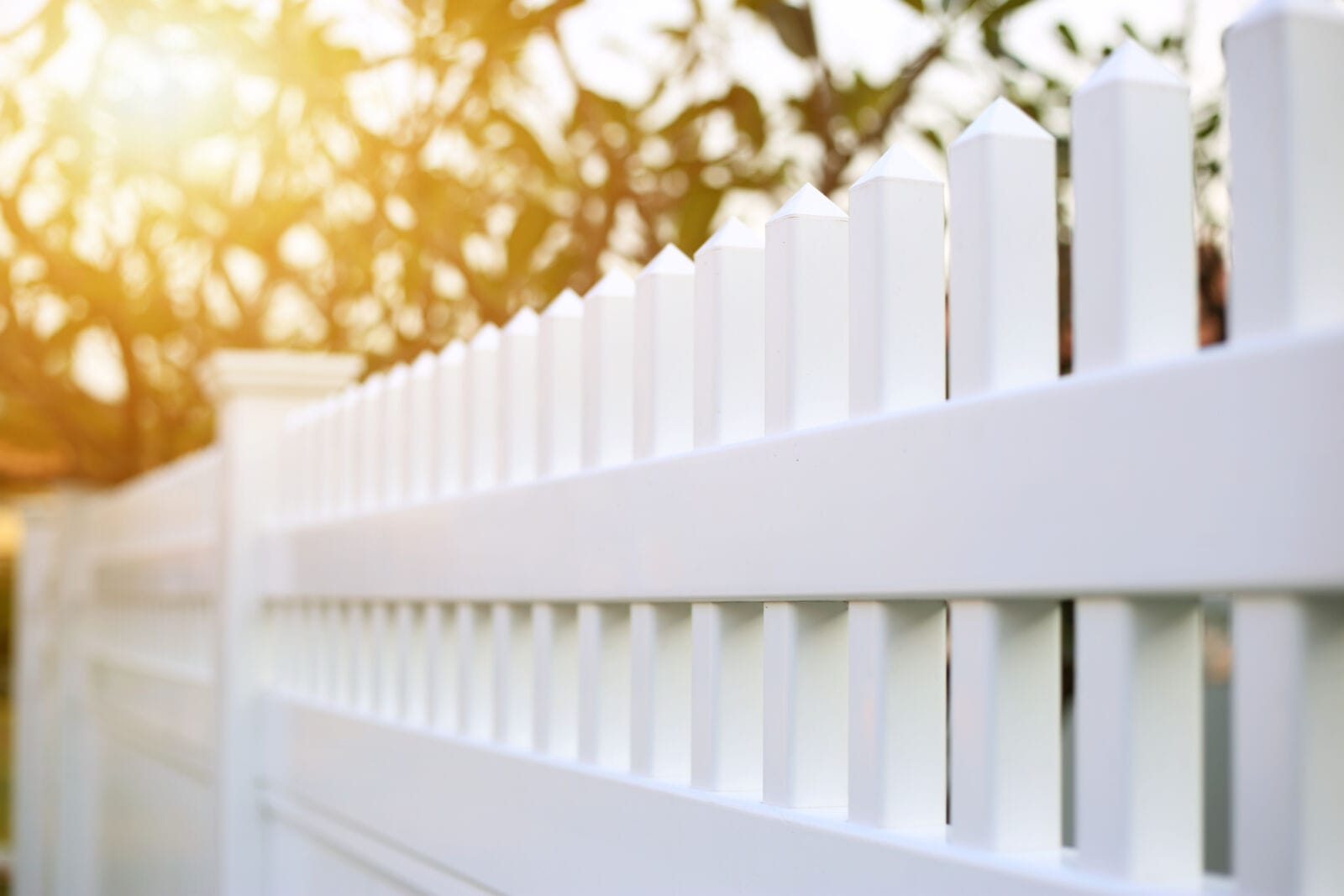
A fence does more for a property than most homeowners realize until they have one done right. Privacy, security, curb appeal, pet and child safety, property value, noise reduction — a well-built fence delivers on all of it, and in the Dallas–Fort Worth Metroplex where neighborhoods are growing fast and lots are close together, those benefits matter more than ever. If you have been thinking about installing a new fence on your DFW property, replacing an aging one, or simply repairing what you already have, this guide is going to cover everything you need to know — materials, styles, what to expect from the installation process, tips for making the right choice for your specific property, and what to look for when hiring a fencing contractor in North Texas.
At Texscape Solutions & Exteriors, fencing installation and repair is one of the services we provide across the entire DFW Metroplex. From Denton and Lewisville to Flower Mound, Argyle, Southlake, and beyond, we install and repair fences for homeowners who want the job done correctly — properly set posts, quality materials suited to the North Texas climate, and a finish that looks sharp and holds up season after season. Our approach to fencing is the same approach we bring to every outdoor project: built right the first time, backed by a commitment to your satisfaction.
Why Fencing Matters More Than Ever for DFW Homeowners
The Dallas–Fort Worth Metroplex has been one of the fastest-growing regions in the entire country for the better part of the last decade. New subdivisions, denser neighborhoods, and a booming real estate market have created conditions where privacy has become one of the most consistently cited priorities among homeowners across North Texas. When lots are close together and neighborhoods are active, a properly built privacy fence is what gives you and your family a genuine sense of having your own space — a backyard that feels like a retreat rather than a fishbowl.
Beyond privacy, fencing in DFW serves important practical purposes. A secure fence keeps pets and children safely within your property. It defines your property line clearly, which prevents the kind of neighbor disputes that become costly and complicated when boundaries are unclear. A well-maintained fence enhances curb appeal in a way that is immediately visible from the street and contributes meaningfully to the perceived value of your home. And in a region where outdoor living is a year-round activity, a fence that encloses a well-designed backyard transforms the entire feel of the outdoor space.
The DFW real estate market also rewards good fencing. Homes with well-maintained, quality fencing consistently appraise higher and attract more buyer interest than comparable homes without. This is particularly true for homes with privacy fences enclosing a backyard with outdoor living features — the combination of a finished outdoor space and proper enclosure reads as a complete, move-in-ready package to buyers across North Texas.
Fence Materials for DFW Homeowners: What Performs Best in North Texas
Material selection is the most important decision in any fencing project in the Dallas–Fort Worth area. Different materials perform very differently under DFW's specific climate conditions — intense summer heat, UV exposure, occasional freeze events, and the dramatic soil expansion and contraction that North Texas clay is famous for. Here is a detailed breakdown of the primary fencing materials and how each performs in DFW.
Wood fencing is the most popular fence material across North Texas, and cedar is the specific wood that DFW homeowners and contractors reach for most. Cedar has natural oils that resist rot, insects, and moisture better than other wood species — which matters enormously in a climate that swings from drought to heavy rain within the same season. A properly installed cedar fence in DFW looks beautiful, provides full privacy, and is relatively straightforward to repair board by board when damage occurs. The tradeoff is maintenance. Cedar in North Texas needs staining or sealing every two to three years to prevent UV graying, surface checking, and moisture-related deterioration at the post bases. A cedar fence that is maintained properly can last 15 to 20 years or more. One that is never sealed or stained will start showing its age in three to five years. Post installation is also critical — cedar posts in DFW need to be set in concrete footings at appropriate depth to resist the soil heaving that clay expansion causes. Short-set posts are the most common reason fences lean or fail in North Texas.
Vinyl fencing has grown significantly in popularity across DFW because it completely eliminates the maintenance requirement that cedar demands. A quality vinyl fence does not need to be painted, stained, or sealed. It does not rot, splinter, or attract insects. Modern vinyl fence systems come in a range of styles, colors, and profiles that go well beyond the basic white privacy panel — gray tones, wood-grain textures, and architectural profiles are all widely available and look genuinely sharp on DFW properties. The practical consideration for vinyl in North Texas is its response to extreme heat and to large hail events, which are a reality in DFW's storm season. Quality vinyl formulations handle the heat well, but lower-grade vinyl can warp or become brittle over time. Hail can crack vinyl panels, particularly on horizontal rail sections. Choosing a quality vinyl product from a reputable manufacturer matters more than it might seem when you are buying a fence expected to last 20 to 30 years.
Composite fencing sits at the intersection of wood and vinyl — it is manufactured from a combination of recycled wood fiber and polymer materials that delivers the warm, organic look of wood with dramatically better resistance to rot, UV fading, and moisture than natural wood. Composite fences do not need to be stained, resist insect damage, and hold their color far longer than cedar. They are a more expensive upfront investment than cedar or standard vinyl, but for DFW homeowners who want the aesthetic of a wood fence without the ongoing maintenance commitment, composite is worth the premium. The material holds up exceptionally well to North Texas summers and its dimensional stability is superior to natural wood under the clay soil movement conditions of DFW.
Ornamental metal fencing — wrought iron, aluminum, and steel — serves a different functional purpose than wood or vinyl privacy fencing. Metal fencing does not provide privacy the way a solid board fence does, but it delivers an architectural elegance, a sense of security, and a curb appeal impact that no other material matches for front yards, driveway entries, and decorative perimeter applications. Aluminum is the most practical metal choice for most DFW applications because it does not rust, is lighter than steel or iron, and is powder-coated at the factory in a finish that holds up well to UV exposure. Wrought iron is the premium aesthetic choice — heavier, more elaborate, and more expensive, but genuinely beautiful and extremely long-lasting when properly maintained and kept sealed against rust.
Popular Fence Styles in the DFW Metroplex Right Now
Beyond material choice, fence style is a meaningful decision for DFW homeowners because the style of your fence contributes directly to your home's curb appeal and to how the outdoor space feels from inside the fence. Here is what DFW homeowners are gravitating toward most right now.
Board-on-board cedar privacy fencing remains the most common residential fence style across North Texas. The overlapping board pattern provides complete privacy with no gaps, excellent structural strength, and a classic appearance that suits the vast majority of DFW home styles. When properly built with good cedar and correctly set posts, board-on-board is a proven, reliable choice that holds its value and appearance well.
Horizontal slat fencing has become one of the fastest-growing fence styles in DFW over the past few years. The clean, linear look of horizontal boards creates a contemporary, architectural aesthetic that complements modern and transitional home styles particularly well. Horizontal fences can be built from cedar, composite, or mixed materials combining wood with metal framing. The horizontal orientation reads as wider than vertical fencing, creating a visual effect that makes smaller yards appear more expansive. From a practical standpoint, horizontal fences in DFW need to be built with spacing and structural considerations that differ from vertical board fences — the horizontal orientation requires appropriate intermediate support to prevent bowing, and the weight distribution on posts is different.
Mixed-material fencing — wood panels combined with metal posts or framing, stone columns at entry points, or masonry pillars anchoring a wood or metal fence — is increasingly popular among DFW homeowners who want something that feels more custom and permanent than a standard fence installation. When a Texscape Solutions masonry column anchors the corner or entry points of a wood or metal fence, the result is a fence that looks and feels genuinely substantial — like a permanent, designed element of the property rather than a standard fence installation.
What the Fencing Installation Process Looks Like
Understanding what a professional fence installation actually involves helps DFW homeowners evaluate contractors and know what to expect from start to finish.
Every Texscape Solutions fence installation starts with a site assessment — we walk the property, confirm the fence line, discuss your goals and material preferences, check for any underground utilities that need to be located before digging, and address any HOA requirements that apply to your community. HOA fencing guidelines are a real consideration for many DFW homeowners, particularly in communities across Flower Mound, Southlake, Argyle, and Highland Village, and getting those details right upfront prevents problems after installation.
Post setting is where the structural integrity of any fence is determined. In DFW's clay soil, posts need to be set in concrete at appropriate depth — generally three to four feet for full-height privacy fencing — to resist the soil heave that North Texas clay causes as it expands and contracts through wet and dry cycles. A post that is not set deeply enough in DFW clay soil will lean, shift, and eventually fail. Every Texscape Solutions fence installation accounts for local soil conditions in post specification from the start.
Panel and board installation follows post setting, with consistent spacing, level runs, and proper fastening throughout. Gates are installed with appropriate hardware for their weight and frequency of use — a high-traffic gate needs heavier-duty hardware than a seldom-used side gate, and using the wrong hardware is one of the most common sources of gate sag and failure in DFW fencing.
The project closes with cleanup and a walkthrough where we review every section of the installation with you, address any questions, and provide specific care and maintenance guidance for your fence material.
Tips for DFW Homeowners Planning a Fence Installation
Check your HOA guidelines before selecting materials or style. Many DFW communities have specific rules about fence height, material type, color, and gate placement. Texscape Solutions is familiar with fencing guidelines across communities throughout the Metroplex and helps clients navigate these requirements as a standard part of our process.
Always have underground utilities located before any post is set. In Texas, 811 is the call-before-you-dig service that marks utility lines on your property at no charge. Any responsible fence contractor will coordinate this as part of their pre-installation process.
Think about your fence gates carefully. A gate that swings in the wrong direction, opens into an obstacle, or is hung with inadequate hardware becomes a daily frustration. Plan gate placement and swing direction deliberately relative to how you and your family will actually use the yard.
Do not try to save money on post depth in DFW clay soil. It is one of the most common shortcuts that leads to fencing failures across North Texas, and fixing a leaning fence that resulted from shallow posts almost always costs more than doing it right the first time would have.
If you are investing in an outdoor living space, design your fence as part of the overall outdoor plan rather than as a separate project. The material choices, style, and placement of your fence should complement your patio, landscaping, and outdoor structures — when everything is designed together, the result is a cohesive outdoor environment that feels intentional and finished.
Fence Repair in DFW
Not every fencing need is a full replacement. Texscape Solutions also provides fence repair services throughout the DFW Metroplex — replacing damaged or rotted boards, resetting leaning posts, repairing or replacing gates and hardware, and addressing storm damage that requires partial fence replacement. North Texas storm seasons can be hard on fencing, and prompt repairs after wind or hail events prevent small damage from becoming a full replacement situation.
If your fence is more than 10 to 12 years old and starting to show widespread deterioration, replacement is often the more economical and better-looking solution than patching multiple sections. Texscape Solutions provides honest assessments — we will tell you if repair is the right call, and we will tell you when replacement makes more sense, with a clear explanation of why.
Fencing Installation and Repair Across the DFW Metroplex
Texscape Solutions & Exteriors installs and repairs fences for homeowners throughout Dallas–Fort Worth — including Denton, Lewisville, Flower Mound, Highland Village, Corinth, Argyle, Lake Dallas, Grapevine, Southlake, Keller, Roanoke, Trophy Club, Coppell, and 17+ surrounding North Texas communities. We bring the same standard of quality, communication, and workmanship to every fencing project we complete across DFW — from a simple board replacement to a full property fence installation.
We are locally owned and operated. When you work with Texscape Solutions on your fencing project, you are working with the people who will actually design and build your fence — not a call center, not a subcontracted crew. Our process is transparent from the first conversation through the final walkthrough, and our 100% satisfaction guarantee applies to every project, every time.

Whether you need a new fence installed, an existing fence repaired, or you are planning a full backyard transformation that includes fencing as part of a complete outdoor design, Texscape Solutions is ready to help. Schedule your free on-site consultation today — no obligation, no pressure, just a clear plan for your DFW fencing project done right.


.svg)
.svg)