
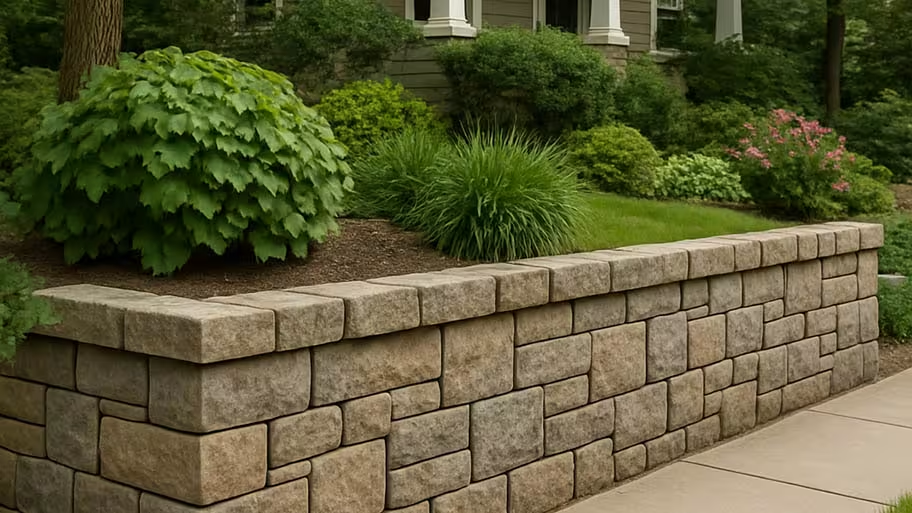
If you have a sloped yard, a grade change between different areas of your property, or soil erosion that gets worse every time it rains, a retaining wall is not a cosmetic upgrade — it is a structural necessity. In the Dallas–Fort Worth Metroplex, retaining walls serve a purpose that goes well beyond aesthetics. They manage soil pressure, prevent erosion, protect foundations, create usable level space out of terrain that would otherwise be problematic, and in many cases are the single most important structural investment a North Texas homeowner can make in their outdoor space.
At Texscape Solutions & Exteriors, retaining walls are one of the masonry services we have built our reputation on across DFW. Over 14 years and 900+ completed projects in Denton, Lewisville, Flower Mound, and throughout North Texas, we have built retaining walls that solve real problems — drainage challenges, soil movement, erosion, grade changes — while also creating beautiful outdoor environments that homeowners genuinely enjoy. Every retaining wall Texscape Solutions builds is backed by our lifetime structural warranty because we build them correctly from the foundation up.
This guide is for every DFW homeowner who has a slope, an erosion issue, a drainage problem, or simply a yard that cannot be fully used because the grade is working against them. Here is what you need to know about retaining walls in North Texas — why they matter here specifically, what they are built from, what the installation involves, and how to make sure yours is done right.
Why Retaining Walls Matter More in DFW Than Most Homeowners Realize
The Dallas–Fort Worth area presents a combination of conditions that make retaining walls both more necessary and more technically challenging than in many other parts of the country. Understanding those conditions is the first step to understanding why retaining wall construction in DFW demands specific expertise and should never be treated as a basic DIY project or handed to a contractor who does not specialize in masonry and structural outdoor construction.
North Texas clay soil is one of the most expansive soil types in the United States. When it absorbs water it swells significantly. When it dries out it shrinks and cracks. This constant movement creates what engineers call lateral soil pressure — the force that soil exerts against any vertical structure built to hold it in place. A retaining wall in DFW is not just holding soil in position — it is actively resisting the pressure of that soil expanding and contracting season after season, year after year. A wall that is not engineered and built to handle those forces will eventually fail, regardless of how attractive it looks on installation day.
DFW's rainfall pattern compounds the soil pressure challenge. The region experiences long dry periods followed by intense storm events that can deliver multiple inches of rain in a short window. When clay soil that has dried and cracked suddenly receives a large volume of water, it saturates rapidly and the expansion forces on any retaining structure become significant. Proper drainage behind a retaining wall — typically a gravel backfill layer and perforated drainage pipe — is what relieves that hydrostatic pressure before it builds to a level that can damage or displace the wall. A retaining wall without proper drainage in DFW is not a question of if it will have problems — it is a question of when.
The good news is that when a retaining wall in DFW is properly engineered, properly footed, and properly drained, it handles these conditions without issue and performs beautifully for decades. Texscape Solutions brings 14 years of North Texas masonry experience to every retaining wall we build — which means every wall we install accounts for the soil conditions, drainage requirements, and climate demands of DFW from the design stage forward.
What Problems Do Retaining Walls Solve for DFW Homeowners?
Retaining walls serve several distinct purposes in DFW residential properties, and understanding which problem or combination of problems a wall needs to address is essential for designing the right solution.
Slope management is the most common reason DFW homeowners invest in retaining walls. A yard with a significant grade change — whether a natural slope, a hillside, or a terraced property — presents a challenge for usability, aesthetics, and erosion control that a retaining wall addresses directly. By creating level platforms behind the wall, a retaining wall turns unusable sloped terrain into functional outdoor space — for patios, planting beds, lawn areas, or additional outdoor living zones. Multi-level retaining wall systems on heavily sloped DFW properties can create dramatic, layered outdoor environments that look stunning and function far better than the original slope.
Erosion control is a critical function of retaining walls on DFW properties where soil is moving downslope during rain events. When the topsoil in a yard is being displaced by water runoff — visible as erosion channels, soil deposits at lower points, or progressive thinning of soil depth upslope — it indicates that the grade and drainage of the property are not managing water appropriately. A properly designed retaining wall with integrated drainage stops the erosion at the source and prevents the progressive landscape damage that unchecked erosion causes.
Foundation protection is a less discussed but genuinely important function of retaining walls on properties where soil movement or water flow is directed toward the home. Soil that moves toward a foundation — either through gravity on a sloped property or through water-driven erosion — creates conditions that contribute to the foundation differential movement that is one of the most costly and damaging problems DFW homeowners face. A retaining wall that redirects soil pressure and water flow away from the foundation addresses this risk proactively.
Landscape bed definition and elevation are the more aesthetic applications of retaining walls in DFW outdoor spaces. Raised planting beds retained by low masonry walls, landscape borders that define the edge of a patio or lawn area, and low garden walls that create visual structure in a flat yard are all applications where retaining wall construction adds beauty and organization to an outdoor space without necessarily addressing a major drainage or structural challenge. Even in these lower-stakes applications, proper construction technique matters because a wall built without appropriate base preparation and drainage consideration will deteriorate over time even if the soil pressure loads are modest.
Retaining Wall Materials for DFW Properties
The material selection for a retaining wall in North Texas needs to account for both structural performance requirements and the aesthetic goals of the installation. Texscape Solutions builds retaining walls in a range of materials and helps every DFW homeowner select the option that best suits the structural demands of their specific site and the visual character they want for their outdoor space.
Natural stone retaining walls are among the most beautiful and durable structures available for DFW residential properties. Limestone, fieldstone, and other regional stone varieties have been used for structural masonry across North Texas for generations because they perform exceptionally well in the local climate and age with a grace and character that manufactured materials cannot replicate. A natural stone retaining wall looks like it belongs to the land — organic, substantial, and genuinely beautiful in every season. Natural stone walls require skilled masonry craftsmanship to build correctly because the irregular shapes of natural stone require experienced hands to set properly with appropriate bearing surfaces and interlocking courses.
Concrete block retaining wall systems — including manufactured segmental retaining wall products — offer precise engineering specifications, consistent dimensions, and a range of color and texture options that suit a variety of DFW home styles. Engineered segmental retaining wall systems are designed with interlocking geometry and precise specifications for maximum wall height, batter angle, and drainage requirements that provide a clear structural design framework. These systems are appropriate for taller walls where the soil pressure loads are higher and a more prescriptive structural approach is warranted.
Brick retaining walls bring the classic, warm aesthetic of clay brick to structural landscape applications. Brick walls suit traditional and craftsman-style DFW homes particularly well and deliver a finished appearance that integrates naturally with brick exterior home architecture. Brick retaining walls require appropriate footing depth and drainage provisions just like any other retaining structure in DFW's clay soil environment.
Manufactured stone veneer over a concrete masonry unit core is a cost-effective approach to achieving the look of natural stone in a retaining wall application without the premium cost of full natural stone construction. The structural core is built from concrete masonry units with appropriate engineering, and a manufactured stone veneer is applied to the face to create the appearance of a natural stone wall. When done correctly by an experienced masonry contractor, the result is genuinely attractive and structurally sound. Texscape Solutions specifies the right approach for each application based on the structural requirements of the site and the aesthetic goals of the client.
What the Retaining Wall Installation Process Looks Like
Understanding what a professional retaining wall installation involves helps DFW homeowners evaluate proposals and know what to expect throughout the project. Here is how Texscape Solutions approaches every retaining wall build.
The process begins with a site assessment that goes beyond simply measuring the dimensions of the wall location. We assess the slope angle and height of the soil being retained, the soil conditions and drainage characteristics of the site, the proximity of the wall to structures and property lines, and any existing drainage infrastructure that needs to be integrated with or extended by the new wall. This assessment directly informs the structural design of the wall — footing depth, drainage specification, batter angle, and any geotextile or deadman requirements for taller walls.
Foundation preparation is where the structural integrity of any retaining wall is established. In DFW's clay soil, this means excavating to a footing depth appropriate for the frost line and for the specific soil bearing capacity of the site, establishing a level and compacted base, and in most cases installing a gravel drainage layer behind the wall location before construction begins. Skipping or shortcutting footing preparation is the most common cause of retaining wall failure in North Texas — and a failure in a structural retaining wall can be both a costly repair and a safety issue.
Drainage installation behind the wall is a non-negotiable component of every retaining wall Texscape Solutions builds. A perforated drainage pipe at the base of the wall, embedded in a gravel backfill layer and connected to an appropriate outlet, relieves hydrostatic pressure before it can damage the wall. Weep holes through the face of the wall provide a secondary pressure relief path. These drainage elements are invisible in the finished installation — but they are what determines whether the wall performs correctly for decades or starts showing movement within a few years.
Wall construction follows the foundation and drainage work, with careful attention to course alignment, consistent joint quality, appropriate batter angle for the wall height, and proper cap installation. The cap detail — the top course of the wall — is one of the most important visual elements of a finished retaining wall and one of the places where the craftsmanship of the installation is most visible. Texscape Solutions treats the cap as carefully as any other element of the wall because it is the detail that finishes the structure and defines its appearance from the most visible angle.
Tips for DFW Homeowners Considering a Retaining Wall
Address drainage first. If your retaining wall is being built in response to an erosion or standing water problem, make sure the drainage solution is designed as part of the retaining wall system — not as a separate project added later. A retaining wall that does not integrate with the drainage plan of the property will move the problem rather than solve it. Texscape Solutions designs retaining wall and drainage solutions together as integrated systems on every project where both are relevant.
Plan for the landscape above and below the wall. A retaining wall creates a new edge condition in your outdoor space — the vertical face of the wall and the flat platform behind it both become landscape design opportunities. Texscape Solutions helps clients think through the planting design, hardscape elements, and lighting that will make the retaining wall installation look complete and intentional rather than like a functional structure dropped into the middle of an otherwise undesigned yard.
Do not underestimate the importance of permit compliance. Retaining walls above a certain height in most DFW cities require building permits and sometimes engineering review. The height threshold varies by city, but walls taller than three or four feet are commonly subject to permit requirements across the Metroplex. Texscape Solutions handles all permitting for retaining wall projects throughout DFW.
Retaining Wall Installation Across the DFW Metroplex
Texscape Solutions & Exteriors builds custom retaining walls for homeowners throughout Dallas–Fort Worth — including Denton, Lewisville, Flower Mound, Highland Village, Argyle, Corinth, Lake Dallas, Grapevine, Southlake, Keller, Roanoke, Trophy Club, Coppell, and 17+ surrounding North Texas communities. Every retaining wall we build is designed for the specific site conditions of the property, installed with proper footing and drainage, and backed by our lifetime structural warranty.

If your DFW property has a slope, an erosion problem, a drainage challenge, or simply terrain that is keeping you from using your outdoor space the way you want to, a custom retaining wall from Texscape Solutions is the solution. Schedule your free on-site consultation today. No obligation, no pressure. Just a clear plan to solve the problem and transform the space.


.svg)
.svg)